
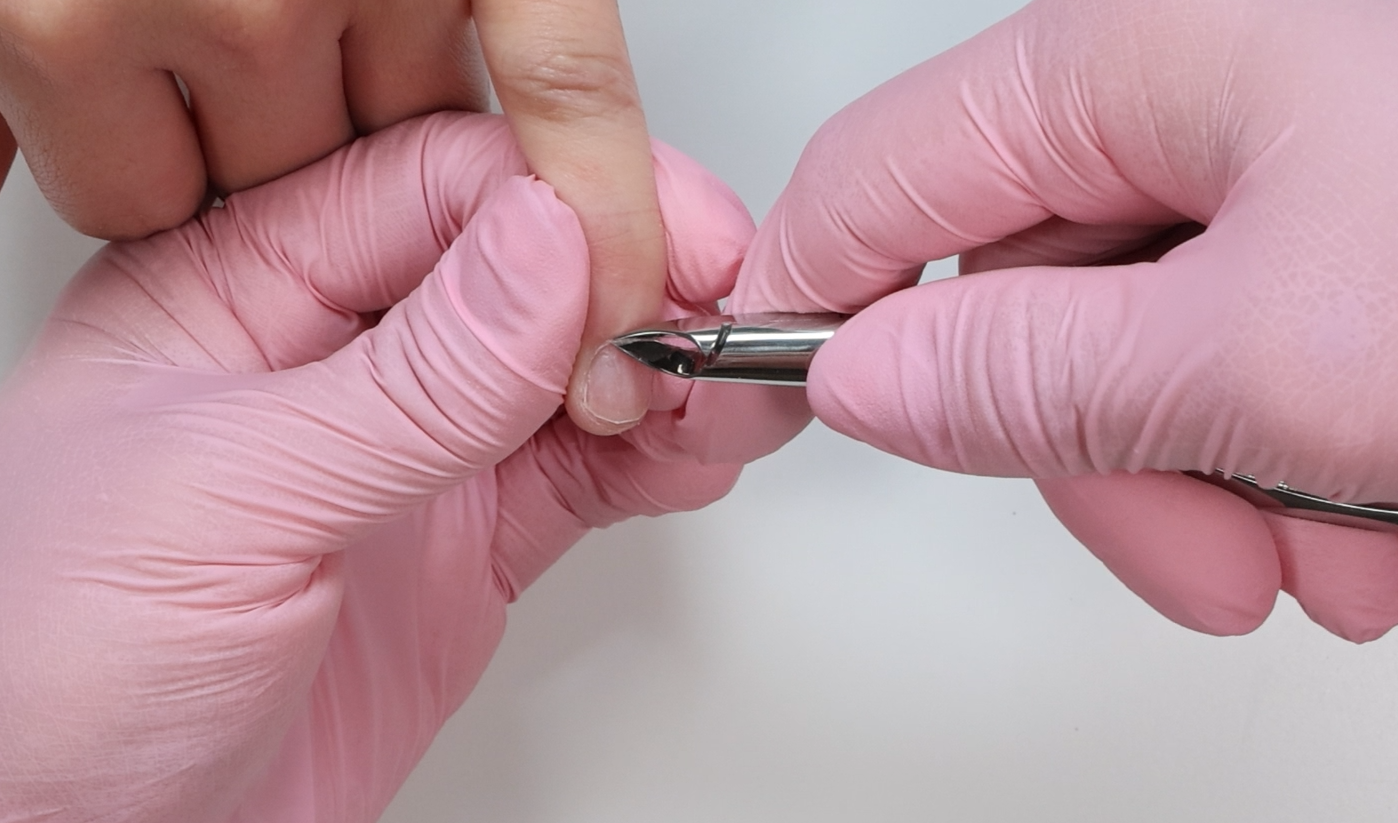

Cuticle care is an essential step in achieving a clean, long-lasting manicure. Proper cuticle removal creates a clean canvas for product application, improves adhesion, and helps prevent premature lifting. One of the most important tools for this process is the cuticle nipper, a precision tool used to trim away dead or calloused skin, remove hangnails, and clean up overgrown cuticles on the nail plate.
When used correctly, a high-quality cuticle nipper can significantly improve the efficiency, accuracy, and overall quality of your nail services. Because this tool is used on a delicate area, choosing a cuticle nipper with reliable construction and precise cutting ability is important. In this guide, we share how cuticle nippers can be used and parts of a cuticle nipper that contribute to its functional use and quality.
How Cuticle Nippers Are Used

During nail prep, cuticle nippers are used after gently pushing back the eponychium (the thin layer of skin at the edge of the proximal nail fold that sits over the nail plate). The nipper removes lifted, dead skin fragments, helping reveal more of the nail plate and creating a cleaner border for precise product application. This allows enhancements to adhere more effectively and reduces the chance of lifting.
Cuticle nippers can also be used to safely remove hangnails (small pieces of torn, lifted skin around the nail). These should be trimmed carefully to prevent further tearing or discomfort. Never cut living skin. A proper nipping technique removes only dead, keratinized tissue to avoid injury, bleeding, and irritation. Make sure to clean and disinfect cuticle nippers before and after each use.
Whether you do your own nail care or provide nail services, investing in a quality cuticle nipper ensures better control, comfort, durability, and precision.
Parts of a Cuticle Nipper
Each part of a cuticle nipper contributes to its performance. Understanding how these parts work can help you choose a cuticle nipper that fits your needs and provides better results
Head

The head is the working end of a cuticle nipper that contains the jaws and cutting edges. It is the part of the tool that performs the actual cutting. The design and quality of the head directly affect the nipper’s precision, visibility, and cutting performance.
A well-made head allows the jaws to close evenly, creating clean cuts without pulling or tearing the skin. The size and shape of the head also affect maneuverability. Smaller, slimmer heads provide better visibility and access in tight areas, while larger heads may provide added strength and durability.
The head houses the most critical cutting components. Therefore, its material quality, heat treatment, and manufacturing precision have a significant impact on the nipper’s sharpness, longevity, and overall performance.
Jaws
The jaws are the two opposing blades at the front of the nipper’s head that open and close to grip loose skin pieces and cut. These blades are sharpened cutting edges, and together they function like a pair of precision shears. The jaws determine how accurately the nipper can access the cuticle area and how cleanly it cuts. Their length, thickness, and alignment influence visibility, maneuverability, and cutting control. Properly aligned jaws meet evenly along their entire length, producing smooth, precise cuts without pinching or tearing the skin.
Jaw size is typically measured in millimeters and affects precision, accessibility, and cutting length.
Smaller jaws (around 3 mm) provide greater control and visibility, making them ideal for smaller fingers, tight cuticle areas, or nail folds with a pronounced curve. Medium jaws (5 mm) are generally considered the industry standard, offering a balanced combination of precision and cutting efficiency for most nail types. Larger jaws (7mm and above) provide a longer cutting edge, allowing more tissue to be removed in a single cut. They also retain their usable length through more resharpenings, giving them a longer service life, though they may be less maneuverable in tight areas.
Blades (Cutting Edges)
The blades, also called the cutting edges, are the sharpened inner surfaces of the jaws that perform the actual cutting. High-quality blades are precisely aligned so they meet evenly from heel to tip, allowing for effortless, accurate cuts with minimal force. Sharp, well-aligned blades reduce the risk of tugging, crushing, or tearing the skin, while dull or misaligned blades can damage tissue and make the nipper more difficult to cut precisely and less comfortable to use.

Joint (Hinge)
The joint, or hinge, is the part where the two halves of the nippers connect. It plays a critical role in the tool’s stability, smoothness, and precision. A well-made joint minimizes wobble and keeps the cutting edges properly aligned.
The two most common joint designs are lap joints and box joints. A lap joint is similar to a pair of scissors, with one handle overlapping the other and connected by a rivet or screw at the center. This design is durable and works well with tools with thicker handles, making it the standard choice. While durable, overtime, repeated side pressure or twisting loosen the pivot, causing the jaws to wiggle slightly and become less stable.A box joint, like the one on the Cuore Cuticle Nipper X or the Shiny Swan Premium Black and White Nippers has one handle that fits through a slot in the other handle, providing support on both sides of the pivot. This more advanced design typically costs more, but does a better job at reducing side-to-side movement, helping the blades remain precisely aligned throughout the tool’s lifespan. Because pressure is distributed across two bearing surfaces rather than one, box joints feel more stable, provide smoother operation, and longer-lasting precision.
Handle
The handle consists of the two arms held by the user. Factors such as length, thickness, and surface finish influence how the tool feels in the hand. Straight handles work well for most users, while rounded designs may provide additional comfort during long periods of use. A well-designed handle should allow a secure grip while requiring minimal effort to operate, helping reduce hand fatigue during detailed nail work. If you have small hands, opt for a handle with shorter lengths and smaller width. Handles with a longer length and wider width may be more suitable for larger hands.

Spring
The spring is what keeps the cuticle nipper blades open between cuts and allows them to reopen smoothly after each cut. A well-designed spring helps the nippers open and close smoothly while reducing hand fatigue during repeated use.
Cuticle nippers with a single spring such as the Shiny Skinny No.1 and Shiny Skinny No.2 feature a strip of metal that rests against one handle. They typically provide lighter resistance, a softer opening action, and quick response, making them popular for delicate and precise work.

Double spring nippers such as the MAYO Mango Pro Nipper use two curved metal strips that work against each other to create smooth and consistent tension. Each metal strip piece is connected to the side of each handle with a screw and are clasped together in the center to create tension. They provide a stronger bounce-back effect and can reduce hand fatigue during extended use by requiring less effort to reopen the tool between cuts. Generally, double spring nippers may have slightly more tension than single spring nippers and are ideal for beginners. However, the metal pieces can be adjusted on some double spring nippers to increase or decrease tension based on your preference.

When it comes to cuticle nippers, cutting corners will compromise quality. Precision and performance matter significantly in this detailed stage of nail prep, which plays a huge factor for a lasting manicure. A well-made cuticle nipper provides cleaner cuts, better control, more consistent results, and comfortability through heavy use. It’s an investment that supports the user, the craftsmanship, and the quality of the finished manicure.
For more nail content including nail art how-to’s, swatches, and new releases, follow Sweetie Nail Supply on social media:

Leave a comment
All comments are moderated before being published.
This site is protected by hCaptcha and the hCaptcha Privacy Policy and Terms of Service apply.